Roaming Roosevelt National Park, North Dakota
Easy hikes, abundant wildlife, and striking scenery
It’s easy to envision its namesake president taking in the richness of nature at Theodore Roosevelt National Park. Writer and nature lover Nick Thomas takes us there and suggests a scenic, moderate-to-easy hike.
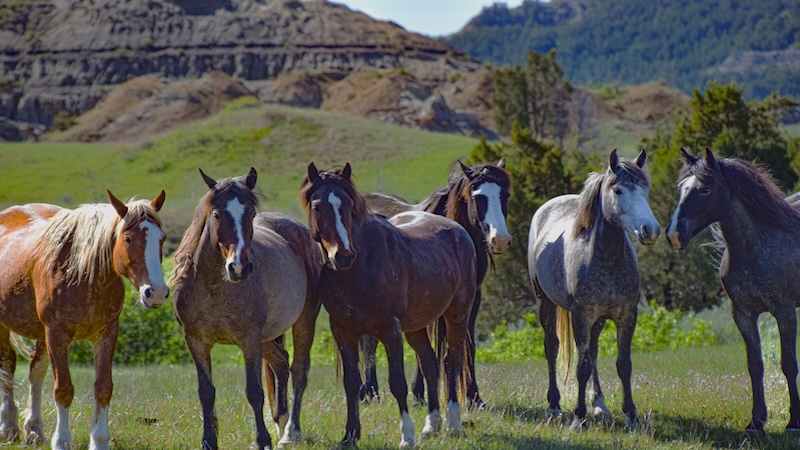
Yellowstone is renowned for its huge bison population. Badlands National Park is famous for stretches of surreal striped landscape. On the Outer Banks, herds of wild horses roam freely. But you don’t have to travel to Wyoming, South Dakota, and North Carolina to experience them. North Dakota’s Roosevelt National Park has all that and more, including one of the largest prairie dog populations of any park. Named after the 26th U.S. president who was an avid nature lover and former area resident at one time, it’s the only National Park named after an individual. So far.
Dozens of hiking trails spread across the park’s more than 70,000 acres (110 square miles) that are divided into North and South Units, 80 miles apart. To be sure, North Dakota is a bit off the beaten track, but the park still receives more than half a million visitors a year. For nature lovers, it’s worth the drive.
Hikes range from short and easy to long and challenging. The Coal Vein Trail in the South Unit is a 0.8 mile loop that’s fairly easy with a few stairs and mildly steep sections. The views are wonderful and the trail highlights the area’s natural history and geology. Once an ancient swamp, underground coal fires burned in the area thousands of years ago caused by “spontaneous combustion, range fires, and lightning” according to the park’s website. Those heat sources cooked the rocks above, producing the red baked rock still capping the surrounding hills. Eventually, the heat caused some areas to collapse and formed the depression that hikers walk through today. Most recently, fires started in the 1950s and burned for three decades.
The striking scenery while hiking includes stunningly colorful rock layers, undulating hills, and vegetation including prickly pear cactus. Visitors should keep a watch out for the bison and wild horses that can pop up anywhere, and always maintain a safe distance. You probably won’t find any prairie dogs on this trail since they prefer, well, prairies. While they are terribly cute, they are very skittish being low down on the food chain and sought out by coyotes, badgers, bobcats, and various birds of prey.
Our last visit to the park was in early spring, before the summer crowds invaded this beautiful vacation gem. Early mornings were still chilly and foggy but were an excellent time to visit with the mist hovering in the valleys. Of the Grand Canyon, Teddy Roosevelt once said, “Leave it as it is. You cannot improve on it.” That applies equally to the park that carries his name.
Visiting Theodore Roosevelt National Park
From the National Park Service park home page: When Theodore Roosevelt came to Dakota Territory to hunt bison in 1883, he was a skinny, young, spectacled dude from New York. He could not have imagined how his adventure in this remote and unfamiliar place would forever alter the course of the nation. The rugged landscape and strenuous life that TR experienced here would help shape a conservation policy that we still benefit from today.
FEATURED PHOTO, TOP: Wild horses at Theodore Roosevelt National Park, North Dakota. Photo by Nick Thomas.
Nick Thomas teaches at Auburn University at Montgomery in Alabama and has written features, columns, and interviews for many newspapers and magazines, including Boomer. His “Take a Hike!” column describes short trails, hikes, and walks from around the country that older adults might enjoy while traveling. See ItsAWonderfulHike.com.