Iconic Route 66: The ‘Mother Road’ Turns 100
Time for a road trip!
There’s probably no other American highway that’s more iconic than Route 66, and it’s no wonder. The road, intentionally built to travel through America’s small towns instead of around them, not only connects us to rural America but passes through areas of stunning natural beauty, lined with an abundance of quirky things to see and do.
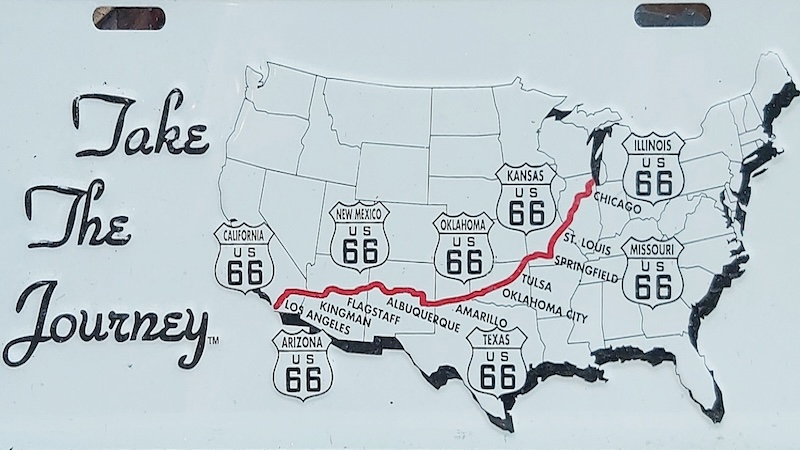
Extending more than 2,000 miles and passing through eight states, the highway has come to represent nostalgic roadside Americana, and to a greater extent, to symbolize Americans’ love for independence, freedom, and the open road.
It’s become a part of our culture, immortalized over the decades in novels like the “Grapes of Wrath,” films like Easy Rider (1969) and Bagdad Café (1987), and songs such as Nat King Cole’s “Get Your Kicks on Route 66” (1946), the Eagles’ “Take It Easy” (1972), and Tom Cochrane’s “Life Is a Highway” (1991).
Route 66 marks its 100th birthday in 2026. What better time to take a nostalgic road trip?
A brief history of Route 66
Established in 1926, Route 66 was originally a continuous, 2,400-mile highway starting in Chicago, Illinois, and running westward to Santa Monica, California. These remain its beginning and end cities, although the starting point has moved from Michigan Avenue in downtown Chicago to the Navy Pier.
The highway created a booming economic corridor as it wove through rural main streets, earning the nicknames “The Main Street of America” and “The Mother Road.”
During the Great Depression in the 1930s, 66 became an escape route for thousands of Midwestern families fleeing the Dust Bowl in search of a better life in California. By the 1940s and 50s, the economy was booming, and the highway evolved into a leisure and tourism hotspot, famous for neon-lit diners, quirky roadside attractions, and mom-and-pop motels.
By the 1970s and 1980s, the creation of the faster, multi-lane interstate highway system made the two-lane Route 66 obsolete. It was officially decommissioned in 1985.
Today, the highway is no longer one continuous route, but you can still drive roughly 85% of the original road. Many survivable segments run parallel or near newer interstate highways, preserved and marked as “Historic Route 66” byways.
Fun things to do in each state
Places all along the Route 66 corridor hosted special events and activities to commemorate the historic highway’s milestone birthday, including the Statewide Conference & Epic Celebration in Springfield, Illinois on Nov. 11, 2026, marking the day the highway was officially approved for construction. Other activities range from footraces and biker tours to commemorative films and a quilting project. Visit the Route 66 Centennial for ways to celebrate from home or in person.
If you want to celebrate Route 66 but can’t hit this year’s events, don’t worry. Many festivals celebrate the iconic highway and its history every year. These include the Texas Route 66 Festival, a 10-day event held in the state’s Panhandle in June, the Route 66 Summerfest in Albuquerque in July, and the International Route 66 Mother Road Festival in Springfield in September.
Route 66 stops by state
From kitschy roadside diners and motels to tacky neon signs and unique attractions, there’s plenty to see and do when driving this iconic road. Here are some places you won’t want to miss.
- Illinois – Before leaving downtown Chicago, check out the unconventional public art and striking architecture at Millennium Park. When heading west, pull over in Wilmington for a selfie with the Gemini Giant, a 28-foot fiberglass “Muffler Man” astronaut. The statue marks the entrance of South Island Park, where you can fish, picnic, and play disc golf.
- Missouri – Route 66 takes you past Gateway Arch National Park in downtown St. Louis, where you can take a tram ride to the top of the 630-foot monument, learn about westward expansion, or explore the riverfront. Farther down the road in Franklin County, stop by Meramec Caverns, once a hideout for outlaw Jesse James.
- Kansas – Only 13 miles of Route 66 travel through into Kansas. You can shop for souvenirs or view the tow truck that inspired “Tow Mater” in the 2006 Pixar movie, Cars, at the 1930s Texaco station in Galena. Then, pull over in Riverton for photos at the Rainbow Bridge, built in 1923, the highway’s only remaining fixed Marsh Rainbow Arch bridge.
- Oklahoma – In Catoosa, visit the free park and see the 80-foot-long Blue Whale of Catoosa statue. About 100 miles farther west, stop for lunch at Pops 66 diner, where you take selfies with a 66-foot-tall neon soda bottle.
- Texas – Enjoy a meal at the Art Deco U-Drop Inn Café in Shamrock. With its flared towers and neon lights, the 1936 café was the inspiration for Ramone’s House of Body Art in Cars. Just past Amarillo, stop at the popular Cadillac Ranch to see the famous art installation with 10 vintage Cadillacs buried nose-first in the ground, a 1970s homage to America’s love of the automobile, or take a short detour south to Palo Duro Canyon National Park.
- New Mexico – In Tucumcari just off I-40, you can spend the night at the historic Blue Swallow Motel, built in the 1930s. Farther west, take an underground uranium mining tour at the New Mexico Mining Museum in Grants.
- Arizona – Stop by the Petrified Forest National Park or take a quick detour near Winslow to check out the huge meteor crater.
- California – Just off the desert stretch of Route 66, visit the Calico Ghost Town in Yermo, a historic 1880s silver-mining town. Conclude your trip at the “End of the Trail” sign at the busy Santa Monica Pier on the Pacific Ocean.
Tips for traveling Route 66
When exploring the original route, remember that some of the original road is no longer drivable. This means you can’t rely entirely on GPS for routing. Instead, try using a guide specifically for Route 66 or the Route 66 Navigation app, which provides digital turn-by-turn routing as well as point-of-interest alerts.
To explore the full length of the highway, allow from 14 to 21 days, depending on how many stops you want to make. While you can start your journey in Chicago or California, the classic journey runs from east to west. Of course, you can always take things slower and explore one section of the highway at a time.