Little Joanie’s Memories of the 1950s
Recalling a decade in her childhood
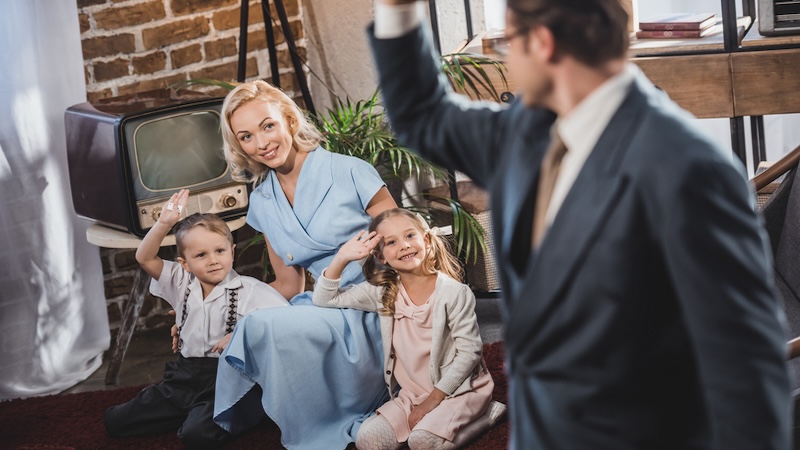
A child’s memories of the 1950s have a different hue from how an adult would have seen things, from the neighborhood to world events. In From Our Readers, Joan Benowitz shares her childhood perspective of the decade, with a dose of adult hindsight.
The 1950s included years of great change well beyond the development I went through personally during the first decade of my life in Jackson Heights, Queens, New York. Many of these changes came about because WWII had ended. There definitely was a postwar boom.
Exciting times erupted with the growth of the middle class. There was actually a 37% increase in economic growth during the ’50s. The purchasing power of families rose by 30%. My family as well as so many others had a TV in our homes as well as toasters and washing machines, which we never had before! Consumer technology rose from 9% in 1950 to 90% in 1960. The GI Bill allowed many people to buy houses in the suburbs, and suddenly there was a baby boom to help fill the houses! Unfortunately, my father wasn’t handy, so he decided not to buy a house in Levittown, Long Island, New York for $9,999, which was probably the biggest mistake in his life. He ended up just renting an apartment all the years he could’ve acquired equity.
This time period could be described as one of conformity. Expectations were there in dress, behavior, and lifestyles. There were “traditional” gender roles – men were the breadwinners, women were the housewives. Family life was based on domesticity and religious adherence, and dating meant going steady with one person. My family was just like that, and so were the families of all my friends.
However, the rumble of discontent began, and women such as Betty Friedan spoke out about gender inequality and the stifling, confined roles women had to adhere to in the postwar years. This led to the feminist movement, which didn’t affect me as a child but surely brought about changes that helped me become the person I am today.
Entertaining memories of the 1950s
Recreational and social activities popular at the time were bowling, card games and drive-in movies as well as diners and jukeboxes. Women were encouraged to involve themselves in do-it-yourself home improvements and hands-on crafting such as hook rugs and pot holders. Children did many of the same activities as their parents. Poodle skirts were in style for mothers as well as their daughters. Hula hoops were a very popular toy in the 1950s and Barbie dolls became a hot item in 1959. Oh yes, I too, was caught up in the frenzy of hula hoop contests and Barbie doll fashions.
Speaking of jukeboxes, rock and roll was born in the 1950s, led in part by by Elvis Presley, Chuck Berry, and Little Richard. Their music took over the radio waves and caused a cultural revolution. I, along with my friends, listened to songs such as “Rock Around the Clock” and “Johnny B Goode.” Anyone with an older sibling was easily drawn into the rhythm of Elvis singing “Hound Dog” or “Love me Tender.” One of the most important effects of rock and roll was that it helped erode racial segregation by bringing black rhythm and blues to white teenage audiences. We loved it all.
And roots of reality
The beginning of the 1950s were Jim Crow years in which racial segregation was enforced by the government. Then, in 1954 things began to change with the Supreme Court decision regarding Brown vs. the Board of Education. It ruled that racial segregation in public schools was unconstitutional. This led the way to the civil rights movement. I heard about this case growing up and it affected me deeply. I knew at an early age that I wanted to become a teacher and made a promise to myself that I would treat all children equally.
When I was a child, the country was led by Dwight D. Eisenhower. We were told that he fought hard to keep Communism out of our country, whatever that was. My teacher informed us that a Cold War was going on between the US and the Soviet Union but as a young child I wasn’t quite sure what that meant. Were they fighting a war in the cold? I began to get an idea what it meant when we were told to hide under our desks during “duck-and-cover” drills supposed to protect us from a nuclear attack. These drills definitely caused anxiety and became a frightening aspect of my childhood.
Books captured my heart at an early age. “Charlotte’s Web,” “The Lion, the Witch and the Wardrobe,” as well as “The Borrowers” and “Nancy Drew” kept me occupied for hours in the ’50s. My older cousins were into “The Catcher in the Rye” and “The Old Man and the Sea,” which they told me I would enjoy in a few years.
In 1955 CBS TV began airing “The Wizard of Oz” annually. It became a tradition for me and many other children to experience this all-time favorite from year to year! We’ve come a long way – now my grandchildren can watch it all day long if they choose to do so.
Thinking back to the first decade of my life, I am reminded that there were many significant moments in politics and culture that were brought into our living rooms via our console TVs. As children, we may not have realized the effect of such moments at the time, but looking back on it now, I see that it was just the beginning of our education and journey towards adulthood.
Read more like Joan Benowitz’s memories of the 1950s and other contributions from Boomer readers in our
Do you have your own stories you’d like to share with our baby boomer audience? View our writers’ guidelines and e-mail our editor at Annie@BoomerMagazine.com with the subject line “‘From Our Readers’ inquiry.”