The Wave
A simple gesture imbued with meaning
The wave is a simple gesture that reaches deep into our humanity, writes Dale Davis. He learned its importance as a 10-year-old, and still practices it more than five decades later. Davis explains in this From Our Readers essay.
The approaching truck wandered across the double yellow line into my lane. Reflexes kicked in as I pressed the brakes and slowed down. I didn’t need some distracted driver ruining my schedule. The other driver, a man older than my 65 years, eased his truck back into his lane and waved his apologies.
We had been in no danger of hitting each other. I waved back to confirm everything was fine. We continued on our ways, and he probably waved to the next driver he approached.
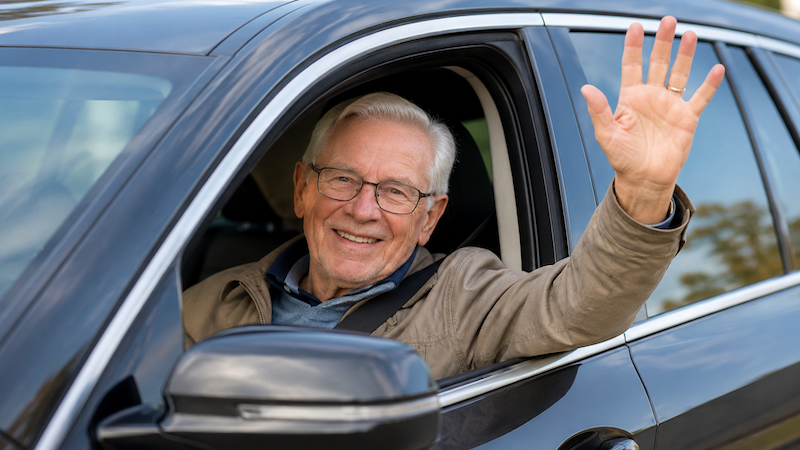
A wave is a simple gesture, a courtesy to recognize other travelers on their journeys. Sometimes the gesture uses the full hand; sometimes, drivers raise an index finger while maintaining their grip on the steering wheel. Often have I waited to exit a store’s parking lot and ease into the bumper-to-bumper traffic of rush hour when a gracious driver waves me ahead. I wave back to say thanks. We’re all trying to get home.
The wave is even more than a courtesy. It reveals our humanity. It reminds us that acknowledging and helping others matters more than our need to reach our destinations without inconvenience. A driver took the time to say hello without saying a word.
Long ago, I learned that when a driver waved to me, I should wave back.
One Sunday afternoon when I was 10 years old, I rode with my father to his farm. He was a pharmacist, and six days a week, he counted pills and dealt with customers who came in for their little pink pills or little yellow pills. The farm was his retreat. There, he counted his cows. He started the tractors to keep their batteries charged. In the winter, he put out hay and feed. I tagged along to get out of the house.
He drove along the two-lane blacktop highway to the farm seven miles from town. We passed fields with cotton or soy beans and kudzu-strangled wooded patches that were likely infested with snakes and other dangers.
A car approached us in the opposite lane, someone going into town on an errand. As the car approached, the driver waved and my father waved back. Minutes later, a truck approached us. Dad raised his hand first, and the driver waved back. My father seemed to know a lot of people.
“Who was that?” I asked as the truck passed us.
“I don’t know. Just a friendly man.”
“Why’d you wave if you don’t know him?”
My father kept his eyes on the road as we passed a truck waiting to pull out from a side road. After we waved and passed, he looked at me and smiled. “It’s what you do. You never know. If your car breaks down and you have to pull over to the side of the road, that man may remember you on his way home and pull over to help you.”
Two strangers approach each other in their cars on a two-lane road. In seconds, we see each other and wave. As our cars rush by, we shift our eyes back to the road ahead. We all want to get where we are going. In that moment when we wave, we stop thinking of ourselves, and to that other driver we express a profound message without saying a word: “I see you.”
A fellow Mississippian once told me that waving to drivers was a characteristic of Southern friendliness. I didn’t buy into that opinion. Waving to strangers is a universal gesture. On a recent bus tour of the Scottish Highlands, my wife and I sat behind the driver as he navigated the coach along a single-lane road. On either side of the road were little half-moon spots, many marked with signs reading “Passing Place,” for drivers to stop and allow oncoming traffic or cars behind them to move on. Each time our driver Jimmy pulled over, oncoming drivers waved as they continued on their way. Before attempting a steep incline, Jimmy pulled over and a group of seven motorcyclists raced past our bus, each waving or giving a thumbs-up gesture to say thanks. Soon, my wife and I joined in the ceremony of waving to the passengers in those cars and trucks. We see you.
Dale Davis lives in Mississippi where he taught English in the community college system. His article “The Smallest Detail” was published in Boomer Magazine. His article “Searching for the Holy Grail” was published in Boomspeak.
Read more like Dale Davis’s gesture of kindness and other contributions from Boomer readers in our
Do you have your own stories you’d like to share with our baby boomer audience? View our writers’ guidelines and e-mail our editor at Annie@BoomerMagazine.com with the subject line “‘From Our Readers’ inquiry.”