Remembering a Special Uncle
Of her many uncles, one stands out
Some relatives have a treasured spot in our memories, especially if we realized their unique goodness when we were still children. For Julia Nunnally Duncan, this is a special uncle, Glenn. She shares her tribute in this “From Our Readers” essay.
Growing up, I had many uncles. Both grandmothers, paternal and maternal, were generous in producing sons. And though I was closer to certain uncles than others, in my way I loved them all. Only now that they’re all gone, can I appreciate how precious they were and how blessed I was to have them in my life.
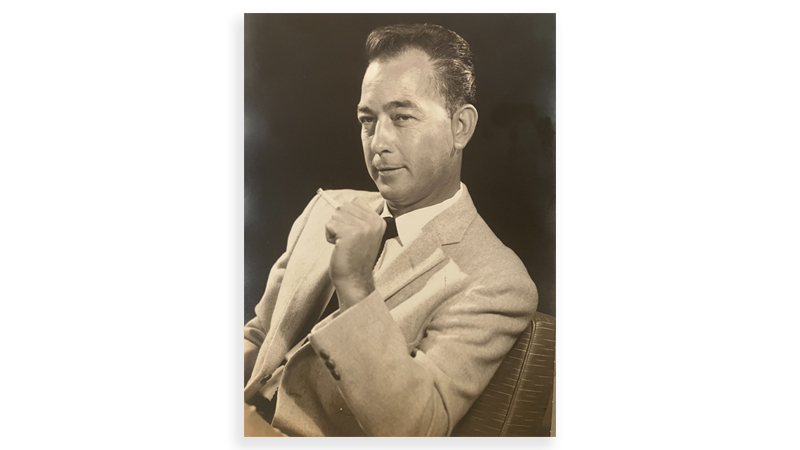
But one uncle stands out – I think for my older brother, Steve, and me both. Glenn, our father’s younger brother, was different from the rest. He lived in Fort Lauderdale, Florida, and worked there for a telephone company. He came home to North Carolina from time to time, and his visits with us were fun.
While visiting in the early days, he stayed at my grandmother’s house, but later he stayed with us. He and my father were close, and he liked my mother’s cooking, especially her gravy and biscuits. She always made him a hardy portion of this dish, and he savored every bite. His wife, Judy, an affable native of Massachusetts, to whom Glenn introduced us in the mid-1960s, had not learned to bake biscuits, though my mother gave her biscuit-making lessons while she was at our house. Glenn loved settling down at our dining room table and eating a familiar Southern meal.
During his visits, Glenn spent a lot of time with Steve and me. In the evenings, he sat cross-legged on our front room floor with us and played poker. We bet pennies, and he never seemed to tire of playing with us. In fact, he clearly enjoyed our company.
Glenn had been married twice before his final marriage to Judy and had a daughter and a son from these previous marriages. I met his son, Mark, who came with him a couple of times when he visited us. Mark was a friendly, handsome boy, a few years older than I, and I was thrilled to meet him. I had only heard about Glenn’s daughter from my mother, who remembered her as a beautiful baby. He and Judy adopted two baby girls, whom he doted on. He named the first one after my grandmother.
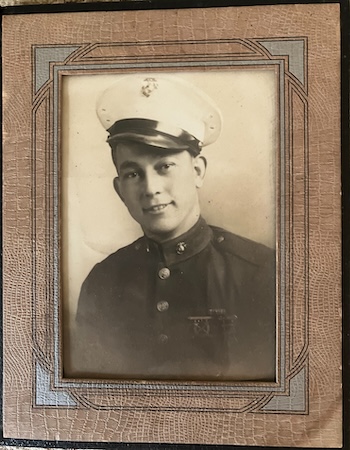 Glenn was a tall, slim man, very tan from his years in Florida. His hair was clipped short, perhaps a carryover from his U.S. Marine Corps days. One Christmas, in 1967, my family drove to Fort Lauderdale to spend the holiday with Glenn and Judy. We left Western North Carolina on a gray, snowy-looking morning to find a sunny, warm Fort Lauderdale the next evening. When we arrived at Glenn’s neat white suburban home, he greeted us from his front steps, wearing shorts, his brown skin a sharp contrast to our pale winter skin.
Glenn was a gentleman, the sort of rare man who stood when a woman entered the room and who said, “Pardon me,” if he accidently brushed your arm when passing by. My mother often commented on his politeness. His two earlier marriages were a mystery to me, though I had the impression from my mother’s recollections that both the former wives were from well-to-do families. She told about the mother of one of these wives who came with her daughter to visit my grandmother. Sitting on my grandmother’s front porch and impatiently fanning in the heat, this “proper woman” complained about the flies and my grandmother’s outside toilet. I wondered if class difference might have been a factor in Glenn’s failed marriages. Though Glenn was refined, I’m sure he never forgot his working-class roots in East Tennessee and Western North Carolina.
Glenn’s health had begun to decline around 1970, when he was hospitalized with liver disease. My family drove the long journey from Marion, North Carolina, to Fort Lauderdale and then to Miami to visit him in the hospital. When I stood at the door to his hospital room, I was taken aback by how thin and jaundiced he was. But in time, he rallied and regained his health – for a while.
In the mid-1970s, Glenn was diagnosed with throat cancer. I was married by this time and didn’t accompany my parents on their flight to Fort Lauderdale to spend time with him. In later years, my mother often spoke about this somber visit.
“He couldn’t talk,” she said. “When we were listening to the radio and the song ‘Feelings’ played, he wrote me a note saying he liked that song.” I had remembered his also liking the Frank and Nancy Sinatra song “Somethin’ Stupid” that was popular in 1967 when he and Judy were visiting us. Now when I hear that Sinatra song, I think of Glenn, just as my mother always thought of him when she heard Morris Albert’s “Feelings.” She added, “We knew when we left Fort Lauderdale that day, we would never see Glenn again.” And she said how sad my father was when he said goodbye to his beloved brother for the last time. Glenn passed away shortly afterwards in June 1977, at the age of fifty-four.
When Glenn died, our family lost a dear brother, brother-in-law, and uncle. And his wife and daughters lost a devoted husband and father. Glenn had left an envelope with some cash inside and a note instructing Judy to take their daughters to Disney World. When Judy found this note after Glenn’s passing, she honored his request, giving his daughters his final gift.
I often think about Glenn, and my brother Steve and I reminisce about him.
“He was good,” we both agree. And I recall a long-ago night when Glenn was getting ready to leave our house to head back to Fort Lauderdale early the next morning. At the time, Steve and I were still young and shared a bed. Glenn slipped into our dark bedroom and gently kissed Steve’s cheek and then mine. (I was “playing possum” and was aware of Glenn’s presence.) The tenderness and love for us that our uncle expressed in that moment will remain with me always.
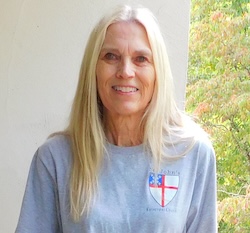 Julia Nunnally Duncan is a Western North Carolina author of thirteen books of prose and poetry. She has a newly released essay collection, The Flood of Remembrance, published by Redhawk Publications (2025). Other recent books include a poetry collection, When Time Was Suspended (Redhawk Publications, 2024) and an essay collection, All We Have Loved (Finishing Line Press, 2023). She is a retired English instructor, having taught at her local community college for over 30 years. She enjoys writing, playing the piano, and spending time with her husband, Steve, their daughter, Annie, and the family Australian shepherd, Rascal.
Read more like Julia Nunnally Duncan’s memories of her special uncle and other contributions from Boomer readers in our
Do you have your own stories you’d like to share with our baby boomer audience? View our writers’ guidelines and e-mail our editor at Annie@BoomerMagazine.com with the subject line “‘From Our Readers’ inquiry.”