‘Marriage and Other Monuments’
A review of a novel by Virginia Pye
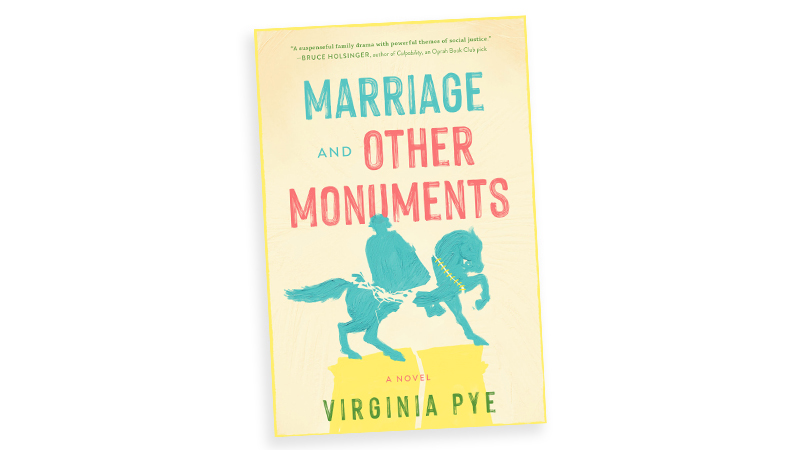
Social justice protests, anger over Confederate monuments, the Covid pandemic, and family struggles come together: a review of “Marriage and Other Monuments” by Virginia Pye.
Recalling the year 2020 sparks memories and emotions for people around the world. For many in the U.S., thoughts of the Covid pandemic merge with the racial reckoning – smoldering for decades, sparking with the stirring of the coal, and then reigniting to a blaze by the death of George Floyd. For residents of Richmond, Virginia, that racial unrest found its center in the city’s monuments honoring Confederate war leaders. Virginia Pye’s Marriage and Other Monuments takes that tension and wraps it in a family drama that continues to resonate.
The work of fiction is set in Richmond during the turbulent summer of 2020, as public protests, racial reckoning, and pandemic isolation collide, exacerbated in one extended family by long-buried personal tensions.
The novel follows two estranged White sisters, Cynthia and Melissa, whose marriages and moral assumptions face very different pressures as the world around them shifts, and their husbands, who have their own emotional battles to fight.
Melissa has jumped with both feet into the anti-monument and pro-Black right protests. Married to a Black man, Marshall, with a son from their union, she has a growing recognition of White complicity in racial inequity, in Virginia and beyond. As she navigates her place in the movement, she must also face the emotional emptiness of her marriage to Marshall. Marshall leans into his growing detachment from Melissa and a nascent attraction to an old friend.
Cynthia, meanwhile, confronts her own uneasy compromises and private disappointments, admitting the ways privilege, loyalty, and silence have shaped her home life. Her husband, Bobby, has been his successful father’s begrudging pawn throughout his life, ignoring his own dreams and succumbing to the emotional abuse. In the process, Bobby has disappointed his wife and slid into financial ruin.
As the summer heats up and their marriages veer in opposite directions, the sisters begin to heal old wounds. Their husbands each finds his own direction, guided by the influence of generations of Richmond family history, one White and one Black.
Against the backdrop of Richmond’s monument removals and national debates over history, justice, and memory, Pye uses marriage as both subject and metaphor. The monuments of the title are both public symbols and the private structures people build around love, identity, family, and respectability. As the structures fall, the characters must decide what is worth preserving and what should be dismantled.
The novel explores race, class, social conscience, and intimacy without separating the political from the personal. Its central relationships reveal how secrets and avoidance can erode trust, while broader social upheaval forces characters to examine who they have been and who they want to become. Rather than offering easy moral resolution, Pye presents people struggling toward honesty in a moment when old certainties no longer hold.
‘Marriage and Other Monuments’ by Virginia Pye
Köehler Books, 2026
Three Richmond Books to Promote Awareness of Black Issues: From Reconstruction to today