It’s 4 A.M., With a Song to Match
Somebody, somewhere is lying awake
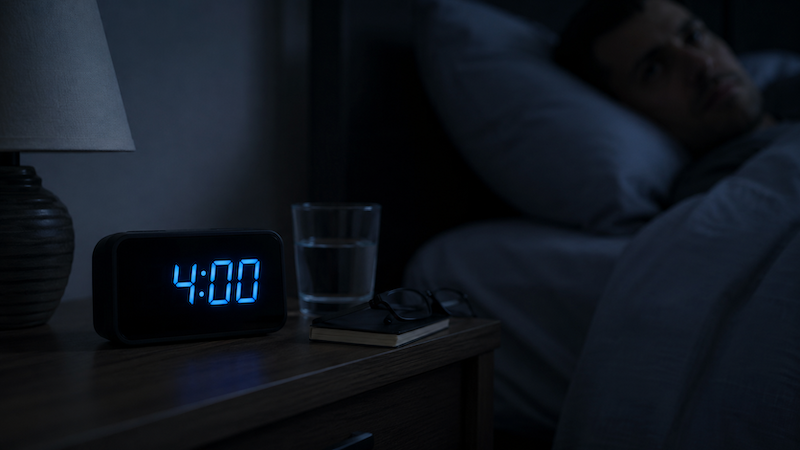
What is it about 4 a.m.? Humorist Joel Samberg finds himself awake at that unreasonable hour, for some reasonable reason. Apparently, he’s in the company of famed lyricists.
By virtue of having been on Earth for quite a few years now, seasoned citizens like me are very knowledgeable. We know a lot of things.
Like what four o’clock in the morning is really like.
Whether because of biological urges, muscle aches, or medication side effects, we have a close, ongoing relationship with something we can’t hug or snuggle with. When’s the last time you cuddled with a clock that said 4:00 a.m.?
You know who likes 4 a.m.? Lyricists. I guess 4 a.m. must be evocative of certain emotions that are good for songs. It’s heard on quite a number of records by such vocalists as Judy Garland, Shirley Bassey, Paul Simon, and Karen Carpenter.
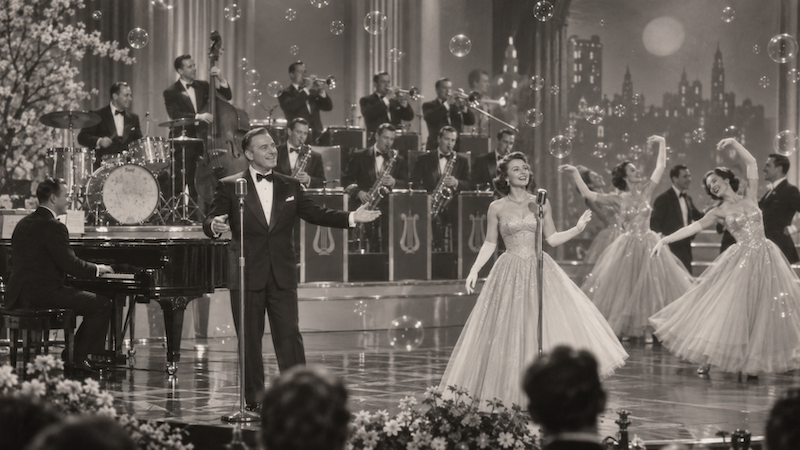
Use of the lyric goes back more than a hundred years, to 1914, when Irving Berlin wrote a song called “I Want to Go Back to Michigan (Down on the Farm).” In it he tells the story of a silent dawn from someone’s past that is shattered by a noisy bird: “I miss the rooster, the one that used to wake me up at four a.m.” Happiness, even anticipation, can almost be detected. The song was recorded by several artists, one of the most famous being Judy Garland for the 1948 film Easter Parade.
Sammy Cahn and Ron Anthony wrote a song called “It’s Always 4 A.M.” that was also recorded numerous times, most notably by Shirley Bassey in 1967: “It’s always 4 a.m. Your thoughts take wings but nothing brings that needed bit of slumber.” It’s sad – but it alludes to the fact that nothing, not even 4 a.m., can stop us from trying to make some sense of an often senseless world.
Less than a decade later, Paul Simon penned “Still Crazy After All These Years.” As befits his role as one of our most acclaimed musical poets, Simon described sheer desolation in just eleven words: “Four in the morning, crapped out, yawning, longing my life away.” It’s like watching an old movie on TV that, even though it’s dated, still makes us realize that our own lives are becoming boring by comparison.
The following year, Richard Carpenter, John Bettis, and Albert Hammond wrote a song called “I Need to Be in Love,” which turned out to be Karen Carpenter’s favorite Carpenters song. The semibiographical ballad, no doubt reflecting her overall mood, places the action in an empty house filled both with gloom and also a touch of faith: “So here I am with pockets full of good intentions, but none of them will comfort me tonight. I’m wide awake at four a.m. without a friend in sight. I’m hanging on a hope, but I’m alright.” Karen wasn’t all right – but she sang it with complete conviction.
All of these songs are thought-provoking, comforting, haunting, intriguing…
But still, whenever I have to get up at 4 a.m., I don’t think about Judy Garland, Shirley Bassey, Paul Simon, or Karen Carpenter. I think how nice it would be if I was younger and not so damned knowledgeable.
Joel Samberg’s work has appeared in Pittsburgh Magazine, Hartford Magazine, Brooklyn Magazine, Moment Magazine and many others. He also writes the popular monthly “Off Ramp” column for Connecticut Magazine, for which he recently won first place in the humor column category from the Connecticut division of the Society of Professional Journalists. He is also the author of eight published books. Recently Joel founded a community theater and performing arts group in Avon, Connecticut, called Playhouse 44.