A Time When the Block Was Your Home
In 1959, his neighborhood was filled with friends and watchful parents
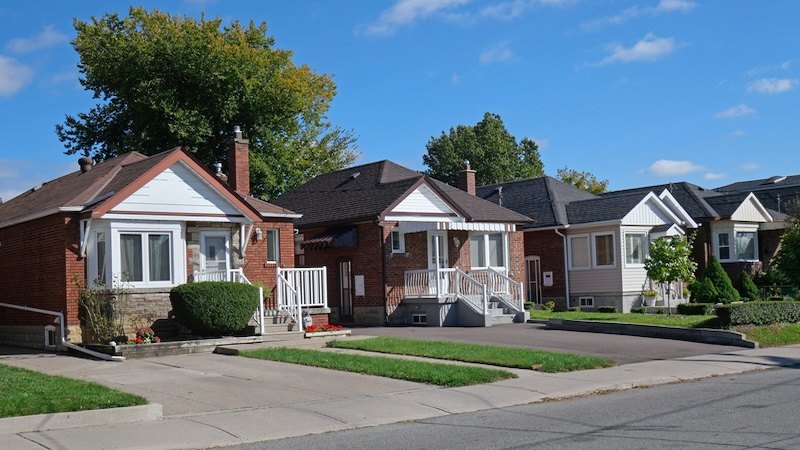
Neighborhoods have changed – in familiarity and social meaning, if not in architecture. In From Our Readers, Roger Pierangelo recalls the time when the block was your home, the neighbors were friends, and the other parents were watchful guardians.
Moving into my present neighborhood on the North Shore of Long Island many years ago and leaving my friends from the old neighborhood behind, my goal was to make new friends, since to me, all friends were strangers at one time. How hard could that be, because there were 81 large stately houses within walking distance from my house. So, I decided to take my dog on walks several times a day – after all, a golden retriever is a great partner for meeting people. However, after many futile trials of walking and searching for anything that was breathing, the attempts became futile.
The neighborhood reminded me of the Nevada atomic bomb villages they would build to see how a community reacts to a blast. There were no people, no movement, no animals, nothing at all on the streets, on the stoops, in the driveway-nothing, nothing nothing. I was waiting for the tumbleweeds to cross my path. Where did all the people go? After walking my dog six and seven times a day, the dog was hiding from me when I wanted to go out.
A neighborhood where the block was my home
Thinking back to growing up in the boomer years of the ’50s, things were very different; because when I look back, the block on 251st Street was our home, and while you had one set of parents, you also had 26 sets of guardians, 11 on each side of the block. You did not live in a house; you belonged to the block.
All the houses on 251st Street Bellerose Queens could have been prefabricated and dropped down in any order as they were all the same. They were all small Cape Cod-style houses where the rooms were so small you could not fall down in them and no two doors could be open at the same time.
As you pulled up to my house at 81-22 251st Street, the first thing that struck you was the meticulously manicured lawn – a postage-stamp-sized green patch similar to every house on the block that featured an assortment of bushes, and in my case, eight plastic roses planted firmly in the ground, flourishing in all seasons and weather conditions, even peeking through the snowdrifts in winter. For all the houses, a couple of steps led to a short walkway and then a three-step stoop, which elevated you to the front storm door.
But besides the similarity of the physical structures, the internal atmosphere of the families on 251st Street were also similar. In those days, the block was your playground, not just your backyard. Stickball took up the whole block – not at first when we were young and could only hit a few feet, but later as we got older, and the ball would roll all the way down to Mrs. Grodincheck’s house at the end of the block where she would retrieve the ball with a smile if it went in her yard. Snowball fights would also take up the whole block, depending on what front yard snowdrift you would hide behind.
It was a different time, and when you walked the street, every house, and every family, was known to you like distant cousins, each with its own stories, trials and tribulations, struggles, etc. But above all everyone was connected, not by blood, but by shared life.
Our band of brothers took up eight houses on the block, but we were familiar with all the families in all the houses. Walking from my house was Billy Wyman’s house where Mrs. Wyman always made us waffles when we came inside to play games and asked us all about our families. Next door, Tommy’s mother always had the bottled Brooklyn seltzer for us, which quite honestly was more fun to squirt than drink because of the handle. It was like seltzer water gun.
Danny Noble’s house was next to Tommy’s, and his parents always sat outside with us and watched us built dirt roads in the backyard for our toy trucks. Next to him was Mr. Woods, who always asked us to help get his RC trailer out of the backyard at the beginning of every summer, and Mrs. Woods would reward us with her apple fritter cookies. The baker, Mr. Popeto down the end, second house before 81st Avenue, used to give us treats from his bakery when we were playing in front of his house. Jesse’s mom and dad (another of the band of brothers) would provide us with drinks on hot days, and Mr. Rotuno, across the street, would have us over to sit on the stoop at night to talk about war stories and have Italian cookies that we could never pronounce. And Mrs. Levine, way at the very end across from Mrs. Grodincjeck, occupying the last house before the avenue, would always say, “Do your parents know you are down here late at night?” when we chased fireflies and didn’t realize how far down the block we had gone.
It was a very special feeling of safety, concern, genuine caring, and it really was our “street family” that always existed during those years, no matter where you were standing on 251st Street.
The safety our band of brothers felt did not come from locks on the doors or alarms but from knowing we were seen, cared about, and woven into the daily fabric of every person on the block.
251st Street wasn’t just where I lived and grew up. It was where I was known, and where I learned how deeply strangers could become family.
When I walk my silent, beautiful, but cold neighborhood now, I often find myself yearning for that past – not out of nostalgia alone, but because I’ve known what it means to truly belong to a place, and to the people in it.
Read more reminiscences like when the block was your home, along with other contributions from Boomer readers in our
Do you have your own stories you’d like to share with our baby boomer audience? View our writers’ guidelines and e-mail our editor at Annie@BoomerMagazine.com with the subject line “‘From Our Readers’ inquiry.”