‘Astrotourism’ Soars Skyward
More travelers are taking trips that highlight astronomical sights
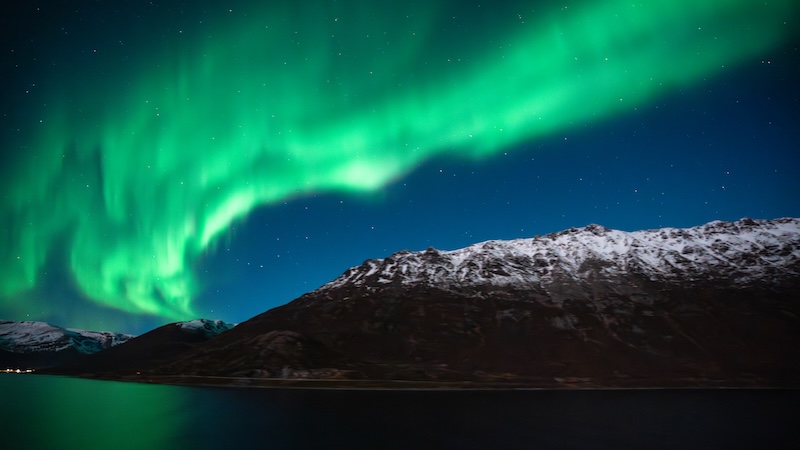
A new travel trend isn’t just for the birds. “Astrotourism” showcases astronomical sights, from celestial events to nightly stargazing where the skies are dark.
Travel to study astronomy is on the rise, says Kelsey Knoedler Perri of Road Scholar, which provides educational travel programs for adults over 50. Road Scholar saw a 68% increase in enrollments for their astronomy programs in 2025.
Pennsylvania State University Professor Kevin Luhman says that advances in telescope technology, especially the NASA’s James Webb Space Telescope, have brought more attention to and interest in learning about space.
“We are fortunate to live during a time in history when our knowledge of the universe is expanding rapidly because of technological advances,” said Luhman, who is also an instructor on Road Scholar’s Astronomy programs at Penn State. “Many people find astronomy to be a fascinating subject because it encompasses some of the most fundamental questions that humans have pondered (how was the universe born? is there life elsewhere in the universe?), combined with phenomena that are visually striking.”
Astrotourism opportunities with Road Scholar
Skyward-focused travel with Road Scholar includes
“The Eclipse of the Century”
This major eclipse will be visible across Europe and Africa in August 2027. Road Scholar offers trips in Portugal and Spain and Egypt. For the Egypt Eclipse trip, the organization chartered the entire ship. “By chartering the full ship we’re going to be able to add some additional educational content onboard, more lectures and other cultural content,” said Road Scholar Program Director Eliza Carrera.
Aurora Borealis
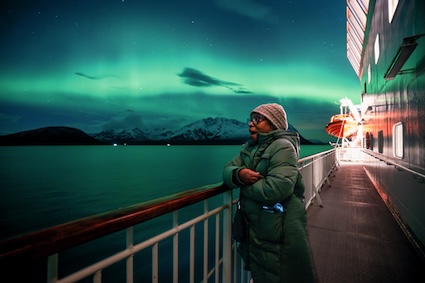
The phenomenal light shows sporadically spotted near the Earth’s poles are stunningly memorable. Popular destinations include Iceland, Norway, Finland, Canada, and Alaska. Road Scholar offers trips and expert insights about the Northern Lights in Manitoba, Iceland, and Norway.
Other astrotourism trips – DIY and more
Even if traveling on your own, you can take advantage of dark night skies and observatories.
Dark sky parks
All across the world, sites have been designated as an official Dark Sky Place, where the stars smother the arc of the sky, and the Milky Way, constellations, and meteor showers are breathtakingly visible (weather permitting!).
“The majority of people live in areas where light pollution prevents them from ever knowing just how much can be visible,” said Road Scholar Program Operations Manager Carryn Kliesen-Whitehead. “When our participants travel to Dark Sky places, like Big Bend, they are suddenly exposed to how vast the universe is and they find it both astonishing and grounding. It seems to awaken something elemental in them and makes them want to get out and explore new areas and even revisit familiar places to see them in a new light (or lack thereof!).”
Road Scholar Dark Sky trips include the Grand Canyon, Big Bend National Park, and New Zealand. Road Scholar lists all of its Astronomy and Dark Sky Adventures at roadscholar.org/astronomy.
Observatories
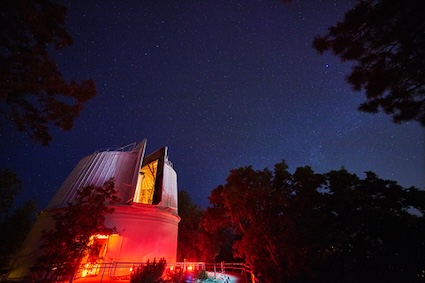
Get a close-up look at the universe with powerful telescopes and expert insights at professional observatories.
- Atacama Desert, Chile, combines very dark desert skies with tourist observatories, expert-led telescope sessions, and astrophotography. Chile’s tourism agency highlights both the Atacama and Elqui Valley for astrotourism.
- Lowell Observatory, Flagstaff, Arizona, is especially good for visitors because you can look through multiple public telescopes, including the historic 24-inch Clark Refractor. Lowell also has the Pluto Discovery Dome and a six-telescope open-air observing plaza.
- McDonald Observatory, Fort Davis, Texas offers regular Star Parties plus special nights where visitors can observe through the research-grade 36-inch and 82-inch telescopes.
- Mount Wilson Observatory, California is exceptional historically. On Public Ticket Nights, visitors can observe through the famous 60-inch and 100-inch telescopes, including the 100-inch Hooker Telescope associated with Edwin Hubble’s work.
A similar trend, “noctourism,” includes night skies as well as bioluminescence, nighttime sledding, night safaris, and even night markets.
FEATURE IMAGE, TOP: Tromsø, Norway, on Hurtigruten cruise line. By Alyssa Bichunsky. Courtesy Road Scholar.