Camp Awakenings
Summer camp lessons extend beyond games and crafts
Summer camp has been a given for many kids over the past decades, including young baby boomers. In this From Our Readers essay, Kathi Boyle O’Brien recalls her camp days, and the “camp awakenings” that she experienced.
The summer I turned 11, my mom found a girls’ sleepover camp for me to escape the city heat and “be busy” for a month. Located in Goshen, New York, the property was partially used as a summer vacation home for an order of nuns and as a private girls school the rest of the year. But for someone from Brooklyn, Goshen was the country.
I went to camp with my friend, who showed me the ropes. Each day we enjoyed a full program of daily activities and on weekends competed as members of the Green or Gold teams for intercamp matches, but the ultimate faceoff was against a rival camp that included a bus trip! Our college counselors were also our cheerleaders and even the handful of nuns at the camp were almost always smiling
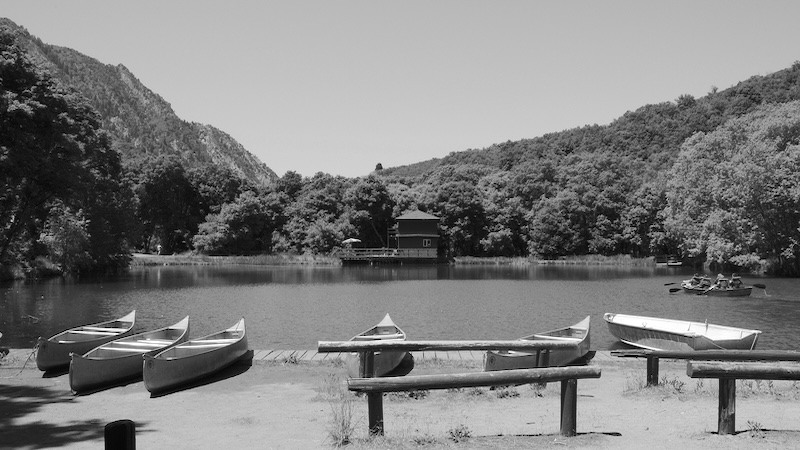
We slept in classrooms in the old stone building surrounded by athletic fields and tennis and basketball courts. Our “bunks” were actually narrow cots, lined up against the blackboard, complete with leftover chalk. There was just enough space under the bed to hide our trunks. Smaller rustic cabins were used for meals, arts and crafts, music, dance, and plays. We climbed the well-worn grassy path for daily lessons and general swim in the large swimming pool on the hill.
Near the softball field, tall full-leafed trees shielded a swing set that was rarely unoccupied. The fresh air rushed around me as I swung high on warm summer nights. As the sun set, all campers met on the great front lawn, framed by the Catskills, and in unison chanted “Day is Done, Gone the Sun…”
Lots of campers played jacks, an activity I loathed, but in our “free time,” there was plenty to do. By now we had gained senior status and enjoyed hanging out in our “cabins.” That’s when I stared at and read about the teenagers in “True Romance,” a magazine that was more explicit than the popular “Teen” magazine. Two of my bunkmates hid plenty of their eye-popping magazines under their mattresses and sometimes shared “amazing” stories of their own from their lives in the Bronx. Lots of adolescent learning was taking place.
Our plain non-descript green camp uniforms with short sleeves were sent to the laundry weekly and were dumped on the counselor’s bunk for sorting during “quiet time.” During my third summer, I had seven bunkmates in the room and we got along really well. Or so I thought. Toni, a well-built teen from Staten Island started to distribute the laundry. With her eyes flashing, she suddenly whirled around the room holding a plain white undershirt, calling out “I guess we all know who belongs to this one!” Laughter followed as she dropped my dreaded undershirt on my bunk. I turned purple, realizing that my fellow campers had all “matured” before me. That night I wrote a pressing letter to my mom. “SEND me bras RIGHT away!” Although we both knew I didn’t need them, she sent them. Toni stopped looking for my underwear.
While we were out catching fireflies or practicing doing the Twist, important events were taking place outside our Goshen hideaway. Nelson Mandela went to jail, astronauts were on the scene, and the Beatles’ first hit was on the radio.
Camp truly was a closed world, avoiding the sharp realities that would continue to jar the revolutionary years of the ’60s. It was closed in other ways, too, with campers all the same faith and with only one Black camper on campus. The emphasis was just on summer fun in those early ’60s, giving us the chance to spread our wings with our peers, gain independence in life habits, learn and sometimes master a new talent or ability, experience leadership, enjoy being a girl, and simply live and grow up.
Kathi Boyle O’Brien enjoyed a long career as a financial advisor at a major brokerage house after working as a bank officer. She built her practice through relationships and teaching multiple financial topics to educate potential clients, many aimed at women. During Covid and retirement, Kathi discovered writing as a wonderful way to reflect and tell her stories, in part to her three children and eight grandchildren. She encourages anyone she meets to share their stories through writing.
Read more like Kathi Boyle O’Brien’s memories of summer camp awakenings and other contributions from Boomer readers in our
Do you have your own stories you’d like to share with our baby boomer audience? View our writers’ guidelines and e-mail our editor at Annie@BoomerMagazine.com with the subject line “‘From Our Readers’ inquiry.”