‘The Smallest Detail’
Handing down music memories and appreciation
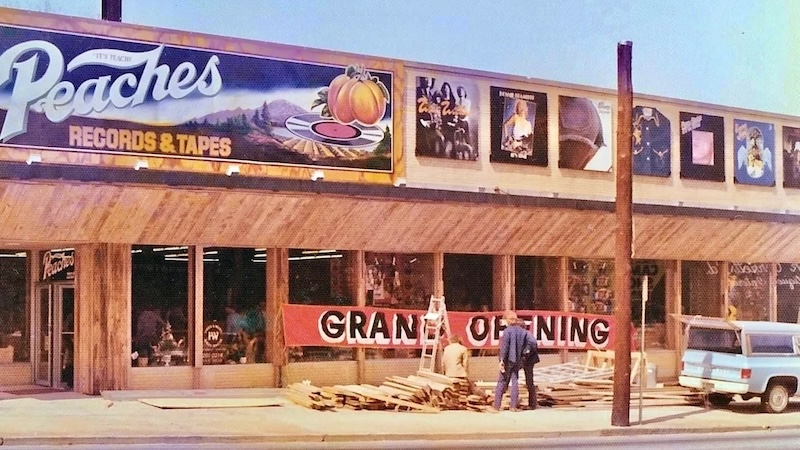
In writing and in life, the smallest detail can strike a chord. English instructor Dale Davis shares a student essay that sparked music memories and illustrated a father’s legacy.
My beginning writing students fill pages with sweeping generalities. They fill pages with sentences that sound profound at 11 o’clock the night before their papers are due. They resist showing details that reveal too much information about their experiences. “Tell me your story,” I advise them. “You know all the details.”
I want them to understand that the smallest detail may connect their stories to their readers’ common experiences, revealing a trove of surprising memories that transforms a work of writing from a presentation to a conversation.
One Friday morning while my English Comp students typed their papers in the computer lab, Chad approached with pages in hand, asking for feedback on his draft. Chad was a decent writer who sat at the back of the classroom and rarely said anything besides, “Here,” to answer roll call. He had submitted his previous two assignments late, so I was surprised he had finished this paper.
The week before, he and I had discussed how his father had inspired his love of Southern rock bands from the ’70s and ’80s, particularly Lynyrd Skynyrd. Chad seemed unusually animated as he explained his plans for the paper. I told him I had been a senior in high school on that night in 1977, struggling through trigonometry homework, when the DJ on the radio announced that the plane carrying members of the band had crashed in a field in south Mississippi. Where was Chad’s father when he heard the news, how old was he? Did he later tell his son the history of that moment? These were questions that Chad might consider. “But if they don’t work with your plans, don’t worry. You have to tell your story your way.”
Now, here he was with a draft. The first paragraph mentioned Lynyrd Skynyrd’s iconic status and mentioned other bands like The Allman Brothers and The Marshall Tucker Band. His next paragraph mentioned how his father had introduced him to this genre of music as they had listened to his dad’s vinyl record albums.
One sentence caught my eye. “My dad bought his music at Peaches Records and Tapes in Memphis when he was in high school.”
I read that sentence and stopped. “Good Lord, Peaches Records and Tapes?”
Students looked up from their typing, wondering what had caused my outburst. Worried, Chad looked at the printout. “I can delete that part,” he offered as I shook my head. He had hit a nerve with the reference.
I had visited that same Peaches store in Memphis many times when I was in college in the late ’70s and early ’80s. Peaches Records and Tapes was a music lover’s heaven, filled with vinyl albums and cassette tapes from artists across many genres. My friends and I braved the crazy Memphis traffic to hunt for the latest albums from local musicians like Isaac Hayes, bands like The Eagles who dominated FM radio, or artists like Bob Marley whose albums I never found at our local Walmart. We bought tickets there for concerts featuring Bob Dylan and Linda Ronstadt. Several times after the store closed in 1987, I drove by that empty building, hoping to hear the ear-splitting music that always boomed from the store’s stereo system. Something besides the music had vanished. My wild college days were over. That year, I was 27 and teaching, a responsible adult.
I shook my head and told Chad to keep the detail. “Your dad will appreciate it.”
Where Chad’s father bought his music was a significant detail. Besides telling the story of his love for Lynyrd Skynyrd, Chad was telling the story of his father’s passing along that love for the band to his son. I appreciated the Peaches Records and Tapes detail, and Chad’s father would appreciate the detail when he read his son’s essay.
Chad’s paper revealed his passion for the music he had listened to while growing up, blending facts about Lynyrd Skynyrd with the narrative of his father. He could not have known the reference to Peaches Records and Tapes would spark memories from my college days. He was too young to have been born when Peaches closed its doors in Memphis, so why mention that fact?
Because his father had shopped at the store. His father bought his music at that Peaches store in Memphis, and later his father mentioned that detail every time he told the story of his love for Southern rock bands and Lynyrd Skynyrd to his son. That small detail provided a pleasant memory for me, but more than that, it was a vital part of a story honoring a legacy handed down from father to son.
Feature photo, top, from To Do STL, “When Vinyl Ruled St. Louis: The Untold Story of Peaches Records”
Dale Davis is a retired community college English instructor and lives in Mississippi. His article “The Writing Trade“ was published in Boomer Magazine. Recently, his article on jazz duo Dwike Mitchell and Willie Ruff, “Tell a Story: Mitchell and Ruff’s Army Days” appeared in “Jerry Jazz Musician.”
Read more like Dale Davis’s music memories and legacy and other contributions from Boomer readers in our
Do you have your own stories you’d like to share with our baby boomer audience? View our writers’ guidelines and e-mail our editor at Annie@BoomerMagazine.com with the subject line “‘From Our Readers’ inquiry.”