A Baseball Card Obsession and a Mother’s Values
Even Mickey Mantle didn’t stand a chance with my mother
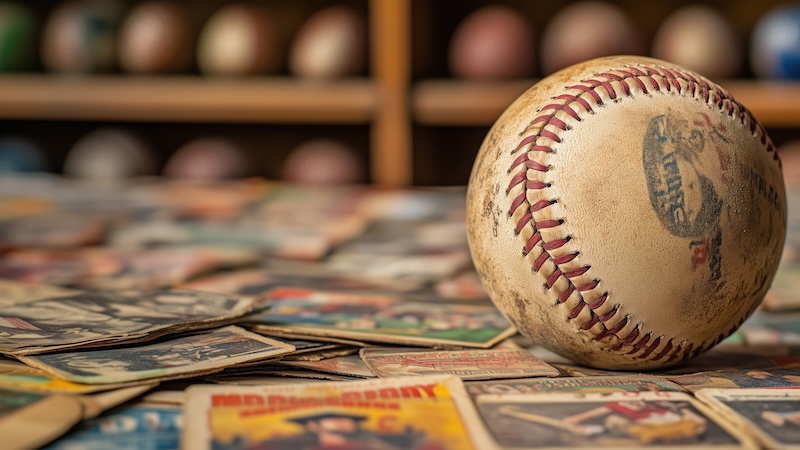
The youthful obsession with baseball cards wasn’t financial. The trading and the games created experiences that would weave the boys closer together, “crafting memories that would last alifetime.” But in adulthood, the cards represented money – and became a loving lesson of his mother’s values.
Why on any given day at age 8 a yearning would develop that would mark the beginning of his own baseball odyssey was so strange to him. But on that day, he and his cousins had ventured to Benny’s candy store, a beloved neighborhood hangout bursting with the sweet scents of chocolate and licorice, Pixie Stix, Hot Tamales, and Turkish Taffy. As he stood at the counter,instead of candy, for some unknown reason, he exchanged a few coins for his very first pack of baseball cards – and so did his cousins.
Still questioning the new purchase, he left without the Pez dispenser that would allow him to eat candy from the neck of an astronaut. They rushed outside, the sun warming their skin, and plopped down on the curb. They were all eager to reveal the players hidden within that package, players he was beginning to know from watching Yankee games with his father when he wasn’t working his three jobs.
The moment he tore open the cellophane, a rush of excitement swept over him, triggered by the unmistakable scent of the thinnest piece of 2×4 pink bubblegum he had ever seen. It was an oddly comforting scent, one of those experiences that reinforce childhood innocence.
Brushing away some white powder-looking substance which today would be investigated as anthrax, they all broke off pieces with a snapping sound and quickly threw it into their mouths while shuffling through the cards. The names started to fly out of their mouths like an enthusiastic roll call: “I got Boone (no idea who this was), I got Valo (no idea who this was), I got Sullivan (and certainly no idea who this was),” until his cousin Robert yelled, “I got Yogi Berra!” – now that one they all knew. Like a trio with their heads two inches apart, they gazed at the card as if they were looking at King Tut’s treasures.
As the cousins examined their cards, they marveled at the vibrant colors and striking images of players frozen in time, each representing a moment in the game’s storied history. In his pack, he discovered seven cards, each one a doorway to a world he was just beginning to understand. But the real gem among his collection was a checklist of Series 1 cards, a tangible representation of the 50 cards he would strive to gather. He had just begun his journey,clutching his seven treasures with dreams of completing the set churning in his mind. At 8, that would be his lifetime goal – nothing else mattered.
Little did he know this seemingly simple moment would weave itself into the fabric of his childhood, shaping not only his summers but also his understanding of the game, the players, and the history that connected them all. Collecting baseball cards became more than just a hobby; it was a solid connection to the band of brothers on his block and offered all of them a rich collection of stories, fun activities, healthy competition, and a deep appreciation for the sport that would soon capture their hearts.
However, it did not stop just collecting cards. He soon found out that they could be used for a whole series of games and experiences. Every day, his friends and cousins would meet after school to trade and compete in made-up games using the cards. Sure, they felt tortured when they would lose a Mantle card, but in those days, it was not worth 12.5 million dollars – it was a mechanism to an afternoon of games and trading, the likes of which could not be matched at that moment in time.
One of those games was flipping cards and trying to match the side flipped by the first person for a win – it was more than just a pastime; it was a ritual that turned the mundane into magic.As his friends and cousins gathered after school, their laughter filled the air, consistent with the distant sounds of summer. The concrete pavement became their playground, where they transformed their prized cards into instruments of competition and camaraderie.
Another of their favorite games was “closest to the wall.” They’d take turns flipping cards, aiming for a brick wall that stood as the unofficial judge of their skill. Each flick of the wrist sent a card soaring through the air, and they held their breath, eyes wide with anticipation, watching as it arced and landed with a soft thud. The victor would claim bragging rights and the card itself, while the rest would cheer – or groan – at the outcome.
In those moments, they were not just children playing – they were sportsmen, strategists, and friends, united by a shared passion. But what was so very important was to see what the other person was throwing, since no one wanted to lose a Mays or Mantle card for infielder Mark Kiger, who never appeared in an MLB regular season game but held the distinction of being the only player whose major league career consisted only of postseason games. That blunder would have kept any of them up for many nights.
Another exhilarating game was flipping cards into a garbage can, which stood as their makeshift hoop. They’d line up, cards clutched tightly in their hands, and take turns trying to land their cards in the can. It was an exercise in precision and timing, and every successful flip was met with triumphant shouts and high-fives. Losing a card was always painful, especially if it was a cherished Banks, Berra, Mantle, or Mays – but those moments of loss were overshadowed by the thrill of the game itself. Back then, these cards weren’t financial assets worth millions; they were vessels of joy, laughter, and shared experiences.
Each game wove them closer together, crafting memories that would last a lifetime. The thrill of trading cards – bartering for a player they admired or a card they’d seen as particularly rare – was akin to the bustling activity of Wall Street, but infused with a sense of innocence and joy that only childhood can bring. The stakes felt high, but they were trivial, yet every trade felt monumental.
Collecting cards became a tapestry of stories: who had the best catches, the wildest trades, or the most legendary flips. It was through these games that he began to appreciate not just thestatistics and figures of the players, but their stories, their struggles, and the legacies they built.
Little did he know those simple afternoons spent flipping, trading, and playing would lay the foundation for his lifelong love of the sport. Each card, each game, connected him to a community, a rich history of baseball, and friendships that would shape his youth in ways he was just beginning to understand. Collecting baseball cards was not just a hobby – it was a celebration of the game, a connection to the past, and an invitation to dream.
Over the years, he amassed what would today be considered a collection worth tens of thousands of dollars – and even more if his collection had all his Mantle cards – an assortmentof baseball cards that once seemed trivial, their value resting at a mere ten dollars, if that much, in his childhood. Those cards lay hidden away in his upstairs closet, tucked behind the remnants of family life: clothes, his mother’s cherished dishes, and memories layered like dust.As he grew older and life took him on a different path, he married and moved away, but the thought of that collection lingered like a comforting whisper from his childhood.
As baseball card prices began to skyrocket, he dreamt of what those cards could provide: his first car, a trip to Europe, a special piece of jewelry for Jackie – luxuries he could never afford on a teacher’s modest salary. One day, propelled by hope and nostalgia, he returned to hisparents’ home. With a heart full of excitement, he asked his mother if she knew where his beloved cards might be. Her response was uncertain but pointed him toward the small upstairs closet where he had last seen them.
Climbing the stairs, anticipation pulsed through him. He envisioned a treasure trove waiting just for him, ready to transform his dreams into reality. As he opened the door to that cramped half-closet, nestled beneath the angled roof of the attic, the familiar musty scent of old fabric and forgotten memories enveloped him. The first items he encountered were his mother’s treasured dishes, delicate and chipped, remnants of family gatherings long past. He gingerly set them aside, then pulled out shawls that once belonged to his grandmother, their fabric soft with the passage of time.
As he continued to sift through the remnants of their family history, he unearthed his father’s school records, his sister’s projects, even his own childhood keepsakes – school reports, hand-crafted ornaments for the Christmas tree, his tiny baby shoes, and the envelope containing his first haircut. Each item he uncovered was a testament to the life they shared, filled with laughter, love, and the unyielding bonds of family. He chuckled nervously at the thought ofwhat else might have been kept – was there a chance she had saved his first bowel movement?
But as he finally pulled away the last of the memories, his heart sank. The closet was empty, save for the echoes of the past. How could his mother, the Queen of Saving Things, not have preserved his cherished baseball card collection? A wave of disappointment washed over him, the dreams of luxury and adventure melting away like ice under the sun.
Yet, in that moment of despair, he paused to reflect on what he had uncovered. Each object represented a piece of their family story, a narrative woven together by his mother with love and memories far richer than any financial gain. Mickey Mantle, as much as he had idolized him, was not family – just a baseball player. His significance to his mother had no meaning in comparison to the legacy of their family.
Read another childhood tale of disappearing baseball cards
Dr. Roger Pierangelo has been a clinical and forensic psychologist for 45 years and has also been a graduate professor and executive director of a national special education association. He has written numerous books and articles. His stories come from his working memoir about growing up as a Boomer, called The Baby Boomer Diaries.
Read more like Roger Pierangelo’s memories of his mother’s values and other contributions from Boomer readers in our
Do you have your own stories you’d like to share with our baby boomer audience? View our writers’ guidelines and e-mail our editor at Annie@BoomerMagazine.com with the subject line “‘From Our Readers’ inquiry.”