Portuguese Towns for Expats
A quieter alternative to the big cities
In these Portuguese towns, expats are finding community, culture, and comfortable living beyond the big cities of Lisbon and Porto.
Portugal has become one of Europe’s most popular destination for expats, known for its safety, mild climate, and high quality of life. A new report from the editors at InternationalLiving.com points to a quieter trend: a growing number of expats are choosing smaller towns across the country that offer charm, convenience, and a more relaxed pace of life.
Across Portugal, a couple can typically live comfortably on about $1,550 to $3,000 a month, depending on location and lifestyle, with many smaller towns offering a comfortable standard of living in the $2,000 to $2,500 range.
From the lush north to the sun-soaked Algarve, residents can enjoy modern amenities, rich history, and strong local communities without the crowds or higher costs of major cities.
“Portugal has a remarkable depth to it,” says Jennifer Stevens, executive editor of International Living. “While cities like Lisbon and Porto are well known, what many people discover once they arrive is that the smaller towns often deliver the lifestyle they’re really looking for – walkability, community, culture, and a cost of living that feels manageable.”
Portuguese towns worth considering
Northern Portugal: Green landscapes and coastal living
In the north, towns benefit from cooler summers, abundant greenery, and a strong sense of tradition.
- Caminha, located at the mouth of the Minho River near the Spanish border, blends history with everyday convenience. With a population of around 17,000, it offers a compact old town centered on a medieval plaza, along with essential services like healthcare, shops, and easy access to larger cities like Porto within an hour.
-
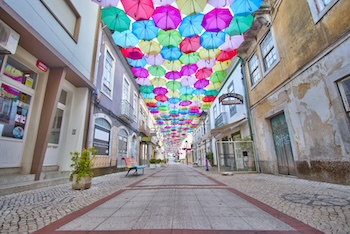
Colorful umbrellas in the street during the Agitágueda street festival in the Portuguese town of Agueda. Nearby, Viana do Castelo combines maritime heritage with modern living. Once a hub during the Age of Discoveries, today it offers seafood restaurants, cultural festivals, and a growing expat presence. With a population of just over 36,000, it strikes a balance between livability and authenticity.
- Further south, Águeda has gained international attention for its Umbrella Sky Project – thousands of colorful umbrellas suspended above its streets. Beyond its visual appeal, Águeda offers practical advantages, including healthcare facilities, shopping, and a welcoming environment where English is widely spoken.
Central Portugal: History and everyday comfort
Portugal’s central region offers slightly warmer weather and a mix of historic towns with strong infrastructure.
- Tomar stands out for its connection to the Knights Templar. Founded in the 12th century, it is home to the Convento de Cristo, a UNESCO-listed complex overlooking the town. With a population of about 20,000, Tomar combines history with modern amenities, including hospitals, shops, and an established expat community.
- Caldas da Rainha, located about an hour north of Lisbon, is known for its thermal springs and daily produce market. Founded in the 15th century, it continues to thrive as a regional hub with healthcare facilities, shopping centers, and easy transport links to the capital.
- Óbidos, one of the country’s best-preserved medieval towns, offers a unique living experience within or just outside its historic walls. Known for its festivals and traditional architecture, it attracts those seeking character and proximity to larger towns like Caldas da Rainha.
The Alentejo: Rural living and space to breathe
For those seeking a quieter, more rural lifestyle, the Alentejo region offers wide-open landscapes and a slower pace.
- Évora, a UNESCO-listed city with Roman and medieval roots, provides a blend of history and livability. With a population of around 55,600, it offers healthcare, shopping, and a steady flow of visitors, making it easier for expats to integrate.
- Beja, located in the lower Alentejo, appeals to those looking for space and affordability. Surrounded by agricultural land, it offers opportunities for property with land, along with a calm, community-oriented lifestyle. Despite its rural setting, it includes essential services such as a hospital, shops, and restaurants.
The Algarve: Sunshine and coastal appeal
In the south, the Algarve remains a favorite for its climate and coastline—but smaller towns here offer alternatives to the region’s busier hotspots.
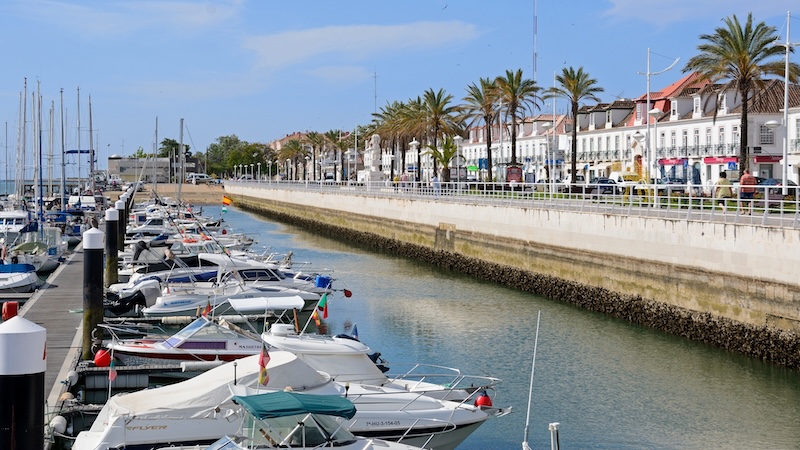
- Vila Real de Santo António, near the Spanish border, combines beach access with a traditional town atmosphere. Known for its distinctive grid layout and seasonal events, it provides a range of amenities and a growing expat community. TOP PHOTO: Yachts and boats moored in the marina with waterfront buildings along the Avenida da Republica in Vila Real de Santo Antonio, Algarve, Portugal.
- Lagos, while well known, still maintains a small-town feel with a population of about 22,000. It offers a mix of beaches, historic sites, and modern infrastructure, including healthcare and retail options.
- Tavira is often described as one of the Algarve’s most charming towns. With its Roman bridge, whitewashed buildings, and riverside setting, it appeals to those seeking authenticity alongside convenience, including access to nearby healthcare and shopping centers.
A different way to experience Portugal
Across all regions, a common thread emerges: smaller towns offer a lifestyle centered on community, culture, and everyday ease.
“Many people come to Portugal thinking they need to be in a major city,” Stevens adds. “But once they explore further, they realize that these smaller towns often provide a richer day-to-day experience – whether that’s knowing your neighbors, shopping at local markets, or simply enjoying a slower rhythm of life.”
The report emphasizes that while costs vary by location and lifestyle, smaller towns generally provide better value in housing and daily expenses, along with access to Portugal’s well-regarded healthcare system and infrastructure.
For expats seeking a balance between affordability and quality of life, these towns present compelling alternatives to more crowded urban centers.