Fast Facts About Fast Food
In honor of National Fast Food Day – and any day you want food fast

November 16 is National Fast Food Day. No one seems to know why it happens to fall on that date each year. In all likelihood, some marketing agent just picked a day out of a hat.
Regardless of how you may feel about them, fast food joints have made a major impact on how Americans have dined out for over a century. Actually, it’s been much longer than that. Just stick around and you’ll see what I mean.
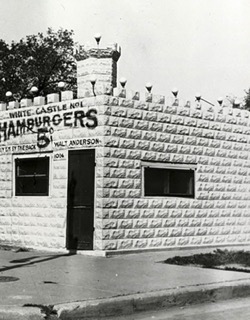 On March 21, 1921, Walt Anderson and Billy Ingram opened the doors of their first White Castle in Wichita, Kansas. And thus was born the fast-food concept as we know it today. However, it wasn’t until 1927 that these same folks began to promote the idea of ordering their nickel hamburgers to go. “Buy ’em by the sack,” became their carry-out slogan.
Although Anderson and Ingram were pioneers in the industry, they were very much opposed to franchising their operation.
That was not the case with Roy Allen, who had set up a roadside stand selling root beer in June of 1919. His first customers were the citizens of Lodi, California, who had gathered for a citywide parade to welcome back veterans of World War I.
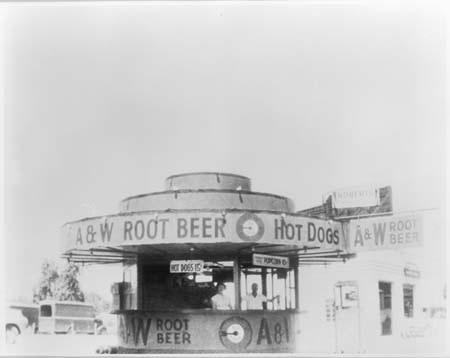 By 1922, Allen and one of his employees, Frank Wright, had combined forces to create their own brand of root beer, which they named by combining the initials of their last names. About three years later, Allen bought out Wright and began franchising his A&W Root Beer stands. By the ’50s, A&W had standardized the practice of serving the frothy brew in their frosty glass mugs.
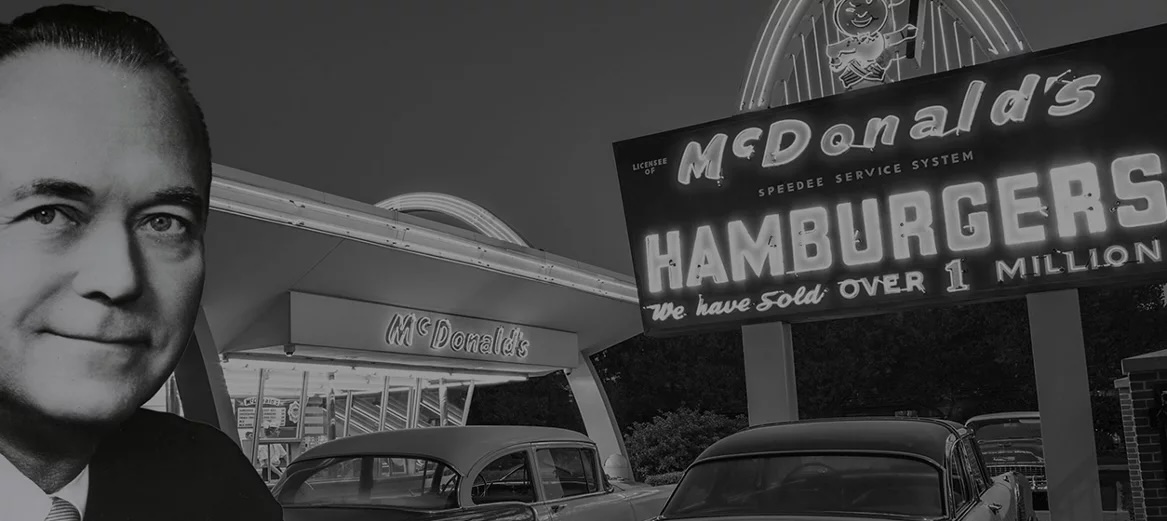
In 1937, brothers Richard and Maurice “Mac” McDonald opened a small hot dog snack bar at the one-runway airport in Monrovia, California. They called the place The Airdrome. In 1940, their menu expanded to include barbecue pork sandwiches when they moved their stand to San Bernadino and renamed the place McDonald’s Bar B-Q. They kept the hot dogs on the menu and offered Mexican-inspired fare as well as peanut butter sandwiches. One more item was added when they made that move. Yes, you guessed it – the hamburger – which, at the time, was considered a secondary option.
By 1948, the brothers realized that 80% of their sales were coming from their hamburgers and cheeseburgers. So, they threw out their barbecue pit and streamlined the menu to feature a nine-item burger-centric menu.
In 1954, a 52-year-old traveling salesman for the Prince Castle milkshake mixing machines company became curious when he discovered that while most of his customers were purchasing one or two of his five-spindle milkshake mixers, the McDonalds brothers had ordered eight. The mixer salesman, a man by the name of Ray Kroc, paid them a visit. He wanted to find out why they needed to blend 40 shakes at one time.
Impressed by the McDonalds’ system and their large crowds, Kroc convinced the brothers to let him serve as their franchising agent. On April 15, 1955, he opened his first franchised McDonald’s in Des Plaines, Illinois. And the rest, as they say, is history.
The ancient roots of fast food
However, if you’re a true history buff, you may be of the opinion that going back a mere hundred years isn’t very historical. Take heart, you buffs, because we can dig much deeper in an effort to go back to the very roots of fast food dining. Let’s head back about 4,000 years to ancient Mesopotamia. If we could actually travel back in time to such metropolises as Ur, Babylon, or Nineveh, we might be intrigued to see how savvy merchants of that day catered to the dining needs of travelers and locals alike, who demanded quick and accessible meals.
According to the website EatsHistory.com, “Archaeologists have uncovered clay tablets with detailed lists of ingredients, demonstrating that Mesopotamians had a sophisticated culinary culture that extended to the food sold in public markets.”
While the wealthier residents of that era typically dined at home, traveling merchants and the less-affluent working class depended on street vendors for sustenance.
So, what was on a typical Mesopotamian menus? Beer was a big seller. So were flatbreads, which were often served with roasted meats that were flavored with onions, garlics, and spices.
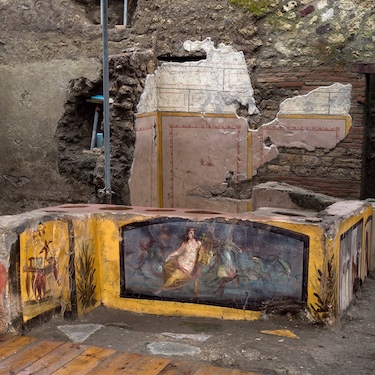 As EatsHistory.com explains, “The Roman equivalent of modern fast-food establishments was the thermopolium, which served hot, ready-to-eat meals to workers, travelers, and city dwellers. These small, counter-style eateries were widespread across the empire, from the streets of Rome to Pompeii, and functioned as a lifeline for lower-class citizens who could not afford elaborate home-cooked meals.”
Visitors to the thermopolia could select from stews, soups, and grains. However, even though you might be eating at a fast food joint in ancient Italy, you wouldn’t find pizza on the menu. Although flatbreads were popular, tomatoes, which came from the Americas, were not introduced to Europeans until the 16th century CE.
If your tastebuds prefer a good Asian meal, let’s orient ourselves to ancient China. Imperial cities there were also famous for their food stalls, where peddlers served roasted meat skewers, steamed wheat buns, and various stuffed flatbreads, which visitors and workers could eat on the go. Asian fast-food street vendors date back to the first century CE and even earlier.
As Europeans took to the seas and came to America, they brought their love for fast food with them. it’s interesting to note that the original fast-food craze in Colonial America consisted of oysters, which were cheap and plentiful along the Atlantic Coast. Travelers on stage coaches were accustomed to quick stops for a bite to eat at taverns scattered along the trail. In order to accommodate the demand for “fast food,” tavern owners kept massive cauldrons of cider-braised chicken or pork stews simmering so they could ladle out meals instantly. For a quick starchy pick me up, tavern keepers whipped up Johnnycakes (or journey cakes), simple batters of cornmeal, water, and salt dropped onto griddles greased with sizzling pork fat.
So, the food may be fast, but the history of fast food has slowly evolved over millennia. When the folks at White Castle opened their doors in 1921, they really weren’t being all that innovative, they were simply carrying on a tradition and satisfying a need for sustenance served quickly and as tastily as was reasonably possible for that era.
While fast food may not be a part of your typical diet, perhaps you could make an exception one day during the year – National Fast Food Day. Rather than eschewing such dishes, you might try chewing some of this popular fare. Typically, the nation’s most popular chains offer special discounts on this very special day.
While nothing has been officially announced as we go to press, chains like KFC, Jack in the Box, McDonald’s, Taco Bell, and Burger King will offer discounts such as a free burger or a buy one get one special. Circle the date (November 16) on your calendar and discover just what mouthwatering deals might be available in your area.
Jest A Moment: Celebrating Food History
Steve Cook has lived in the Richmond area for most of his life, working as a writer specializing in food and travel, an editor, and in marketing and radio. He loves to keep abreast of the restaurant scene and researches the subject voraciously. “I used to think I was a foodie,” he says, “but then I realized I just like to eat a lot.” He once co-hosted a local Richmond restaurant radio program with BOOMER editor Annie Tobey. Cook’s Boomer Bites chases food finds across the U.S. and beyond, like chasing peas with a fork. Steve completed his first novel in 2017 and says he hopes to read another one this year.